How Much Does Fleet Insurance Cost in the UK?
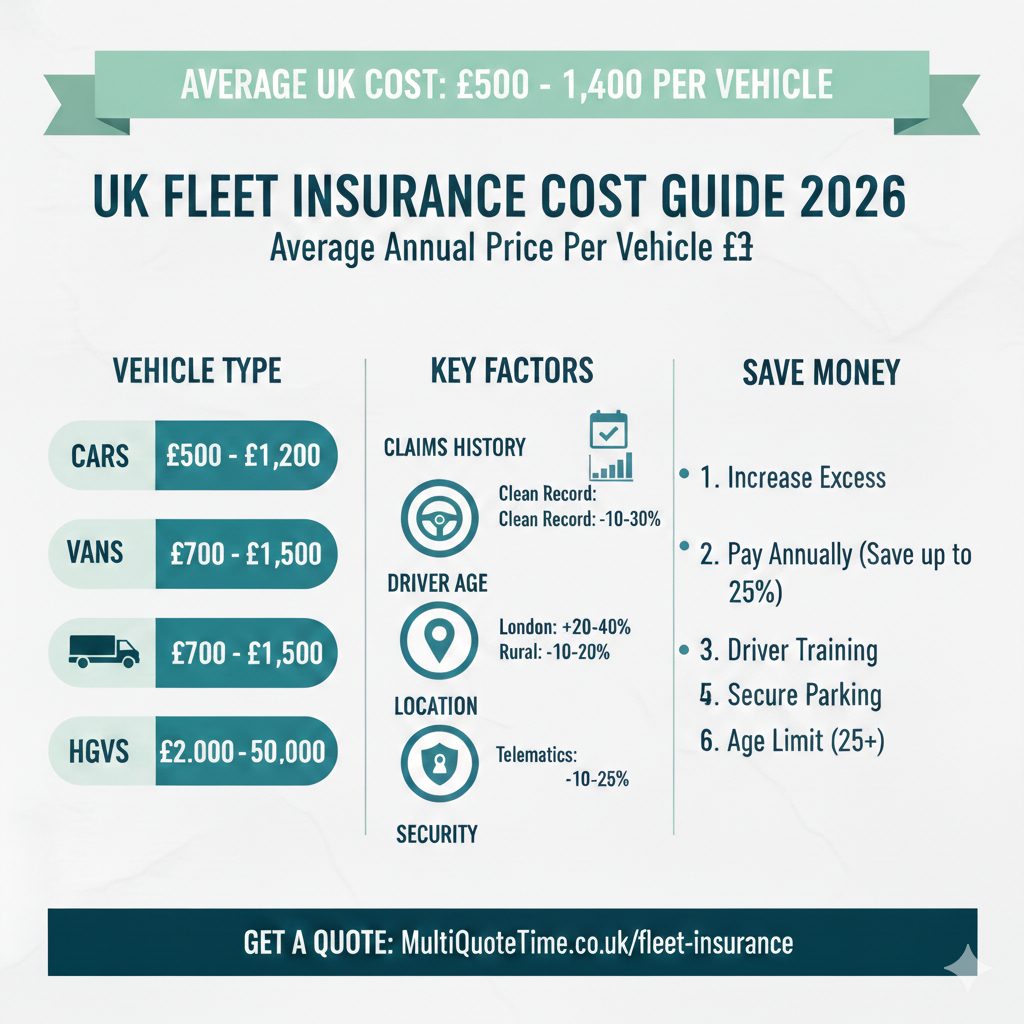
Fleet insurance typically costs £500–£1,400 per vehicle per year. This guide covers costs by vehicle type, worked examples for real fleet sizes, regional pricing, and 8 proven ways to reduce your premium.
How Much Does Fleet Insurance Cost?
Fleet insurance in the UK typically costs between £500 and £1,400 per vehicle per year, or roughly £42 to £117 per vehicle per month. Small local mini fleets with experienced drivers and clean records pay towards the lower end. For those that operate nationally with commercial HGVs and mixed driver ages expect the cost to be significantly higher.
The same two businesses with identical fleets can pay very different premiums as many factors other than business and fleet size have an impact on cost. Finding the right fleet insurance depends on your risk profile—factors like the age of your drivers (keeping them over 25 will reduce overall risk and cost) and the claims history of your drivers all build up a risk profile that will determine the final cost.
When working with your chosen insurance provider you can look at ways of reducing cost, for example agreeing a higher excess, agreeing to named drivers, improving security. The figures below are realistic estimates based on standard risk profiles. Your actual premium will depend on your specific circumstances.

✓ Key Takeaways
Average Cost: Expect to pay between £500 and £1,400 per vehicle annually for standard commercial fleets.
Driver Impact: Restricting drivers to aged 25+ is the most effective way to instantly lower your risk profile.
Payment Strategy: Opting for annual payments can save you up to 25% by avoiding insurer finance charges.
Regional Variance: London and major cities carry a 20-40% premium hike compared to rural UK operations.
How Much Does Fleet Insurance Cost Per Month?
Monthly costs typically run between £42 and £117 per vehicle for standard fleets. Taxi and HGV fleets sit higher, often £125 to £417 per month.
Pro Tip: Most insurers add a finance charge (6% to 25%) for monthly payments. Paying annually is almost always the cheapest way to secure cover.
What Counts as a Fleet?
Most UK insurers define a fleet as 2 or more vehicles on a single policy. The real bulk discounts and administrative benefits usually kick in from 5 vehicles upwards.
Fleet Insurance Price by Vehicle Type
| Fleet Type | Annual Per Vehicle | Key Factor |
|---|---|---|
| Car Fleet | £500 – £1,200 | Mileage |
| Van Fleet | £700 – £1,500 | Usage Type |
| Taxi Fleet | £1,500 – £3,000 | Passenger Risk |
| HGV Fleet | £2,000 – £5,000 | Repair Costs |
How Much is Fleet Insurance for Vans and HGVs?
Van and HGV fleets are among the most searched fleet insurance cost queries and for good reason, they tend to sit at the higher end of the pricing scale. A van fleet operating locally can expect to pay in the region of £700 to £1,500 per vehicle per year. For smaller operations, a dedicated multi van insurance policy can often be the most cost-effective starting point.
For commercial HGV fleets the indicative range is wider, typically £2,000 to £5,000 per vehicle per year, reflecting the greater risk and higher repair costs associated with heavy goods vehicles. Key factors that influence cost include annual mileage, overnight parking arrangements, the age of your drivers and your claims history. Working with a specialist broker who understands the commercial vehicle market can make a significant difference to the price you are offered.
Worked Examples: Real-World Costs
Scenario 1: Local Service Fleet (6 Vans)
Drivers 30-55, clean licenses, local radius.
Est. Total: £3,300 – £3,900 per year.
Scenario 2: National Logistics (45 Vehicles)
Includes HGVs, telematics fitted, secure compound.
Est. Total: £36,000 – £49,500 per year.
Average Fleet Insurance Cost
These three scenarios show how costs build up in practice. Use them as a benchmark, then adjust up or down based on your own driver profiles, claims history and location.
Example 1: Small Local Service Fleet, 6 Vans
- Drivers aged 30 to 55, all clean licences, named driver policy
- Local radius only, within 25 miles, garaged overnight
- No claims in the last 3 years, comprehensive cover
Indicative cost: £550 to £650 per vehicle | Total annual premium: £3,300 to £3,900
Example 2: Regional Delivery Fleet, 18 Vans
- Drivers aged 25 to 45, one fault claim in last 3 years
- Mixed local and national routes, some overnight street parking
- Any-driver policy with 25+ age limit, basic alarms fitted
Indicative cost: £700 to £950 per vehicle | Total annual premium: £12,600 to £17,100
Example 3: National Logistics Fleet, 45 Vehicles Including HGVs
- Documented driver training programme in place
- Telematics and dashcams fitted across the fleet
- Secure compound with CCTV, trackers and geofencing
- 3 to 5 years of clean claims experience provided to the insurer
Indicative cost: £800 to £1,100 per vehicle | Total annual premium: £36,000 to £49,500
Quick sanity check: multiply your estimated per-vehicle cost by the number of vehicles in your fleet, then adjust plus or minus 10 to 20 percent based on claims history, driver mix, security measures and annual mileage.
What Factors Affect Fleet Insurance Costs?
Insurers assess every fleet individually. These are the key variables that push your premium up or down.
Driver Age
Drivers under 25 typically add 25 to 40 percent to premiums. Drivers over 65 add 10 to 20 percent. Setting a minimum age limit of 25+ on any-driver policies removes the highest-risk band and can reduce your premium meaningfully.
Claims History
Insurers typically review 3 to 5 years of claims. A clean record earns discounts of 10 to 30 percent. Frequent claims or large payouts push premiums up significantly. This is the single biggest lever on your renewal price year on year.
Mileage and Routes
Under 10,000 miles per vehicle annually is low risk. National routes add 15 to 30 percent versus local delivery. High-mileage taxi and courier fleets face the steepest increases because of their accident exposure.
Security Measures
GPS trackers, dashcams, CCTV, immobilisers and secure overnight compounds all reduce premiums. Telematics alone can earn discounts of 10 to 25 percent by evidencing safe driver behaviour to underwriters.
Vehicle Type and Value
HGVs and high-value vehicles cost significantly more to insure than small vans or cars. Specialist vehicles attract premium rates. A mixed fleet is assessed on its overall risk profile rather than each vehicle individually.
Industry and Usage
Hazardous materials transport, cash-in-transit and emergency services face 50 to 200 percent increases on standard rates. Professional services and office supply deliveries pay standard rates. Couriers and construction sit in the mid-range.
UK Regional Pricing Differences
Where your fleet is based and where it operates has a real impact on your premium. Urban areas with higher theft rates and denser traffic cost more to insure than rural operations.
| Region | Premium Impact | Notes |
|---|---|---|
| London & South East | +20% to +40% | Highest theft risk, densest traffic, greatest accident frequency in the UK |
| Birmingham & Major Cities | +15% to +30% | Urban density and higher crime rates push premiums above average |
| Suburban Areas | Standard rates | Moderate risk, towns surrounding major cities pay close to average |
| Northern England | Standard to -10% | Sheffield, Derby, Nottingham generally below average |
| Scotland & Wales | -5% to -15% | Lower theft rates and less urban density |
| Rural Areas | -10% to -20% | Lowest risk profile, rural fleets with local routes benefit most |
8 Proven Ways to Reduce Fleet Insurance Costs
1. Fit Telematics and Dashcams
GPS trackers and telematics evidence safe driving to your insurer and can earn discounts of 10 to 25 percent. Dashcams also help defend fault decisions in claims, protecting your no-claims record.
2. Invest in Driver Training
Structured induction programmes and regular refresher courses that align with GOV.UK safety standards reduce accident rates and qualify for premium discounts of 5 to 15 percent. The payback period is typically 6 to 18 months.
3. Upgrade Security
Secure compounds, immobilisers, CCTV and vehicle trackers all reduce theft risk. Insurers reward documented security arrangements at renewal, have evidence ready.
4. Set a Minimum Driver Age
Restricting any-driver policies to 25+ removes the highest-risk age band and reduces your premium. Naming your most experienced drivers where your operations allow it reduces cost further.
5. Raise Your Voluntary Excess
A higher excess lowers your premium but ensure your cashflow can cover it. Calculate the break-even point based on your average claims frequency before committing.
6. Manage Claims Tightly
Report incidents immediately, use dashcam evidence to defend fault decisions, and manage repair and rehabilitation costs actively.
7. Pay Annually
Monthly payments can add significantly to your total annual cost. If cashflow allows, paying in one lump sum consistently delivers a lower price.
8. Shop 3 to 4 Weeks Before Renewal
Approaching the market early gives brokers time to negotiate properly. Late renewals rarely get the best terms.
What You’ll Need to Get an Accurate Fleet Quote
- Claims experience for the last 3 to 5 years, both paid claims and any outstanding
- Vehicle schedule, registrations, current values, use type and annual mileage
- Driver details, dates of birth, licence types, endorsements or any-driver criteria
- Security arrangements, overnight parking, trackers, CCTV and immobilisers
- Risk management documentation, telematics reports and training records
- Current policy details, existing insurer, renewal date and current premium
Frequently Asked Questions
What is the minimum number of vehicles for fleet insurance?
Most UK insurers define a fleet as 2 or more vehicles, though some require a minimum of 3. The real pricing advantage, volume discounts, single renewal, simplified admin, typically begins to show from 5 vehicles upwards.
Can I insure cars, vans and HGVs on one fleet policy?
Yes. Many fleet policies are designed for mixed vehicle types. Insurers assess the overall risk profile of the fleet rather than each vehicle individually. A mixed fleet can simplify your administration and sometimes improve pricing compared to separate policies.
Is any-driver fleet insurance worth the extra cost?
Any-driver policies offer maximum flexibility, useful if you have high staff turnover or irregular rotas. They cost more because the insurer cannot assess individual driver risk. If your staff and routes are predictable, a named driver policy is usually cheaper, but many businesses prefer the flexibility of any driver fleet insurance to avoid constant mid-term adjustments. Setting a minimum age of 25+ on any-driver cover reduces the premium meaningfully.
Is comprehensive or third party cheaper for a fleet?
Historically third party was cheapest, but insurers have found that fleets opting for third party tend to be higher risk, so it is not always the cheaper option in practice. Comprehensive cover also protects against own-damage incidents, which for a commercial fleet can be a significant operational cost if uninsured.
How does telematics affect fleet insurance costs?
Fitting telematics and dashcams across your fleet can reduce premiums by 10 to 25 percent by evidencing safe driver behaviour. The data also helps defend claims and protect your no-claims history, which is the most powerful factor on your renewal price over time.
When is the best time to shop for fleet insurance?
3 to 4 weeks before your renewal date. This gives brokers enough time to approach multiple underwriters and negotiate properly. Leaving it to the last week rarely results in the best terms, insurers know you are under time pressure.
Can I get any driver fleet insurance for younger drivers?
Yes, but expect to pay more. Policies covering drivers under 25 carry significantly higher premiums. If only some of your drivers are under 25, consider whether a named driver policy would be cheaper than any-driver cover with a low age limit.
What is self-drive hire fleet insurance?
Self-drive hire fleet insurance covers vehicles rented out to members of the public without a driver. It is a specialist class of cover with different underwriting criteria to standard fleet policies, typically required by car rental businesses, van hire companies and car clubs.